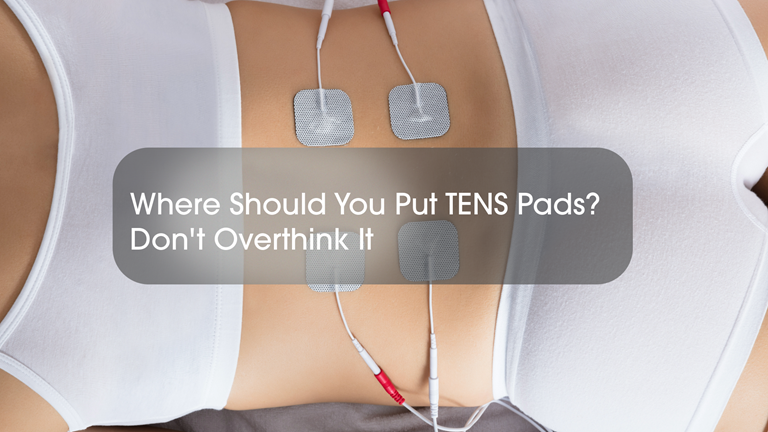

Where Should You Put TENS Pads? Don’t Overthink It
August 7, 2026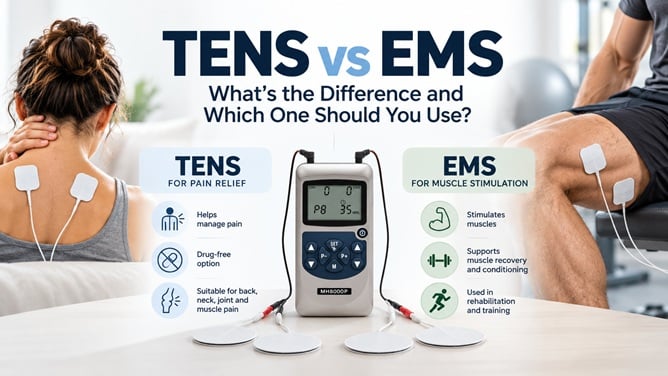
TENS and EMS are two types of electrical stimulation commonly found in modern therapy devices. Although they may look similar and sometimes come together in the same machine, they are designed for different purposes.
TENS is primarily used to help manage pain, while EMS is used to stimulate muscles and produce contractions.
Understanding the difference can help you choose the right technology for your needs and get more from your device.
What is TENS?
TENS stands for Transcutaneous Electrical Nerve Stimulation.
A TENS machine delivers controlled electrical pulses through adhesive electrode pads placed on the skin, usually near or around the area where pain is experienced.
These electrical impulses stimulate sensory nerves and may help reduce the perception of pain.
TENS is commonly used as part of a broader pain-management approach for conditions such as:
- Lower back pain
- Neck and shoulder pain
- Knee pain
- Arthritis-related pain
- Some types of nerve pain
- Menstrual cramps
- Musculoskeletal aches and discomfort
TENS does not cure the underlying cause of pain. However, some people experience temporary relief during or after treatment.
How does TENS work?
TENS is thought to work through several mechanisms, including:
1. Modifying pain signals
Electrical stimulation activates sensory nerve fibres, which may influence how pain signals are processed by the nervous system.
2. Activating the body’s pain-modulating systems
Certain types of TENS stimulation may engage the body’s natural pain-inhibiting pathways.
3. Providing non-drug pain management
TENS can be used without medication and may complement other treatments recommended by a healthcare professional.
The amount and duration of relief vary between individuals. Research findings also vary depending on the condition, stimulation settings and treatment approach.
What is EMS?
EMS stands for Electrical Muscle Stimulation.
While TENS primarily targets sensory nerves involved in pain perception, EMS is designed to stimulate motor nerves, causing muscles to contract.
These contractions may help activate muscles during exercise, rehabilitation or muscle-conditioning programs.
EMS is commonly used for:
- Muscle activation
- Supporting muscle rehabilitation
- Muscle re-education following certain injuries or procedures
- Supplementing muscle-strengthening programs
- Supporting recovery and conditioning programs
EMS is sometimes referred to as NMES (Neuromuscular Electrical Stimulation), particularly in clinical rehabilitation settings.
How does EMS work?
EMS sends electrical impulses through electrode pads positioned over the muscles being targeted.
These impulses stimulate motor nerves, producing visible or noticeable muscle contractions.
Depending on the program, intensity and individual circumstances, EMS can be used to assist muscle activation and training.
Unlike TENS, which often produces a tingling or buzzing sensation, EMS generally creates a more pronounced muscle contraction.
EMS is not a replacement for regular exercise or physiotherapy, but it can be a useful complementary tool when appropriately prescribed or used.
TENS vs EMS: Key Differences
Although both technologies use electrical stimulation, their primary purposes are different.
| Feature | TENS | EMS |
|---|---|---|
| Full name | Transcutaneous Electrical Nerve Stimulation | Electrical Muscle Stimulation |
| Primary purpose | Pain management | Muscle stimulation |
| Main nerve target | Sensory nerves | Motor nerves |
| Typical sensation | Tingling, buzzing or pulsing | Rhythmic muscle contractions |
| Common uses | Back pain, joint pain, menstrual pain | Muscle activation, rehabilitation, conditioning |
| Muscle contraction | Not generally the primary goal | Intended effect |
| Can be used at home? | Yes, where suitable | Yes, where suitable |
| Requires electrode pads? | Usually | Usually |
The simplest way to remember the difference: TENS is primarily for pain management; EMS is primarily for muscle stimulation.
Which Is Better for Pain Relief: TENS or EMS?
If your main goal is to manage pain, TENS is generally the more appropriate technology to investigate first.
TENS is specifically designed to stimulate sensory nerves and may help provide temporary pain relief.
For example, someone experiencing lower back discomfort or knee pain may choose a TENS program as part of their pain-management routine.
EMS, on the other hand, is designed to activate muscles. Although muscle stimulation may have a role in some rehabilitation programs, it is not interchangeable with TENS for pain management.
The right choice depends on the underlying condition, treatment goals and professional advice where required.
Which Is Better for Muscle Recovery and Rehabilitation?
If your goal is muscle activation, EMS may be more appropriate.
EMS can help produce muscle contractions and may be used within structured rehabilitation or muscle-conditioning programs.
For example, a physiotherapist might recommend electrical muscle stimulation to assist quadriceps activation following certain knee procedures.
However, the suitability of EMS depends on the stage of recovery, the condition being treated and the individual’s circumstances.
For rehabilitation following an injury or surgery, obtain guidance from your treating healthcare professional before using EMS.
Can One Machine Provide Both TENS and EMS?
Yes. Many modern electrical stimulation devices combine TENS and EMS functionality in a single machine.
This means you can select different programs depending on whether your goal is pain management or muscle stimulation.
A combination TENS/EMS machine can be particularly convenient for people who want flexibility without purchasing two separate devices.
For example:
- Choose a TENS program when using the device for suitable pain-management purposes.
- Choose an EMS program when using the device for suitable muscle-stimulation purposes.
It is important to select the correct program and follow the manufacturer’s instructions, as TENS and EMS have different stimulation characteristics.
The benefits of a combination TENS/EMS machine
Versatility: Access both pain-management and muscle-stimulation functions.
Convenience: One portable device for multiple applications.
Program selection: Choose from different stimulation modes and settings.
Value: A combined device may be more economical than purchasing separate machines.
At TENS Machines Australia, we offer combination TENS/EMS devices, including the MH8000P, designed to provide a range of electrical stimulation programs in one portable unit.
Explore our range of TENS and EMS machines.
How Do You Choose Between TENS and EMS?
The best starting point is to identify what you want to achieve.
Choose TENS if your primary goal is:
- Managing suitable types of pain
- Exploring drug-free pain-management options
- Complementing an existing pain-management routine
- Using a portable electrical stimulation device for home treatment
Consider EMS if your primary goal is:
- Activating specific muscles
- Supporting a prescribed rehabilitation program
- Supplementing muscle-conditioning exercises
- Improving muscle recruitment under appropriate guidance
Consider a combined TENS/EMS machine if:
- You want access to both technologies
- Your needs may change over time
- You prefer one device with multiple stimulation programs
- You want flexibility for suitable pain-management and muscle-stimulation applications
Is TENS or EMS Safe to Use at Home?
Both technologies can be suitable for home use when used correctly, but they are not appropriate for everyone.
Before using either technology, read the device instructions, contraindications and safety warnings.
Important precautions include:
- Do not use electrical stimulation if you have a pacemaker or certain other implanted electronic devices unless specifically cleared by the relevant medical specialist and device manufacturer.
- Do not place electrodes across the chest, over the front or sides of the neck, or in other locations prohibited by the device instructions.
- Do not place electrodes over broken, irritated or infected skin.
- Do not use electrical stimulation while driving, operating machinery, bathing or sleeping.
- Seek medical advice before use during pregnancy, particularly for abdominal, pelvic or lower-back applications.
- Obtain medical guidance if you have epilepsy, significant sensory impairment, an undiagnosed painful condition or are recovering from surgery.
EMS can produce substantial muscle contractions, so additional care may be necessary around injured muscles, joints or recent surgical sites.
Start with a low intensity and increase gradually according to the manufacturer’s instructions. Stimulation should remain tolerable and should not cause pain.
Frequently Asked Questions About TENS and EMS
Can TENS build muscle?
TENS is primarily designed for pain management rather than muscle strengthening.
Although some TENS settings can produce muscle twitching, this is not generally the purpose of treatment.
EMS is the more appropriate technology when the goal is to produce muscle contractions for suitable muscle-conditioning or rehabilitation applications.
Can EMS help with pain?
EMS may be used in rehabilitation programs where muscle activation is part of managing a musculoskeletal condition.
However, EMS should not be considered a direct substitute for TENS when the primary goal is pain relief.
Does TENS feel different from EMS?
Yes.
TENS commonly produces a tingling, buzzing or pulsing sensation without requiring strong muscle contractions.
EMS is designed to produce noticeable muscle contractions, which may feel like rhythmic tightening and relaxing of the targeted muscles.
Can I use TENS and EMS on the same day?
Some devices and treatment programs allow both forms of stimulation to be used on the same day.
However, suitability depends on the treatment area, underlying condition, device instructions and individual circumstances.
Follow the manufacturer’s guidance and seek professional advice if using electrical stimulation for rehabilitation or a medical condition.
Is a combination TENS/EMS machine worth buying?
For someone interested in both pain management and muscle stimulation, a combination machine can offer useful flexibility.
Rather than purchasing two separate devices, a combination unit provides access to both technologies through different programs.
The most important considerations are ease of use, appropriate settings, electrode compatibility, product quality and access to local support.
Final Thoughts: TENS vs EMS — Which Should You Choose?
TENS and EMS may use similar technology, but they serve different purposes.
TENS is primarily used to help manage pain. EMS is primarily used to stimulate muscles.
If your main concern is pain management, TENS is generally the logical starting point.
If your goal is muscle activation or rehabilitation, EMS may be suitable, particularly with professional guidance.
And if you want the flexibility of both technologies, a combination TENS/EMS machine can be a practical solution.
Discover TENS and EMS Machines at TENS Machines Australia
Whether you’re exploring TENS for pain management or EMS for muscle stimulation, choosing a device that suits your needs is important.
At TENS Machines Australia, we offer a range of TENS and combination TENS/EMS machines, backed by Australian-based product knowledge and support.
Explore Our TENS & EMS Machines
Important: This article provides general educational information and does not replace individual medical advice. Electrical stimulation may not be suitable for everyone. Always follow your device instructions and consult a qualified healthcare professional where appropriate.